
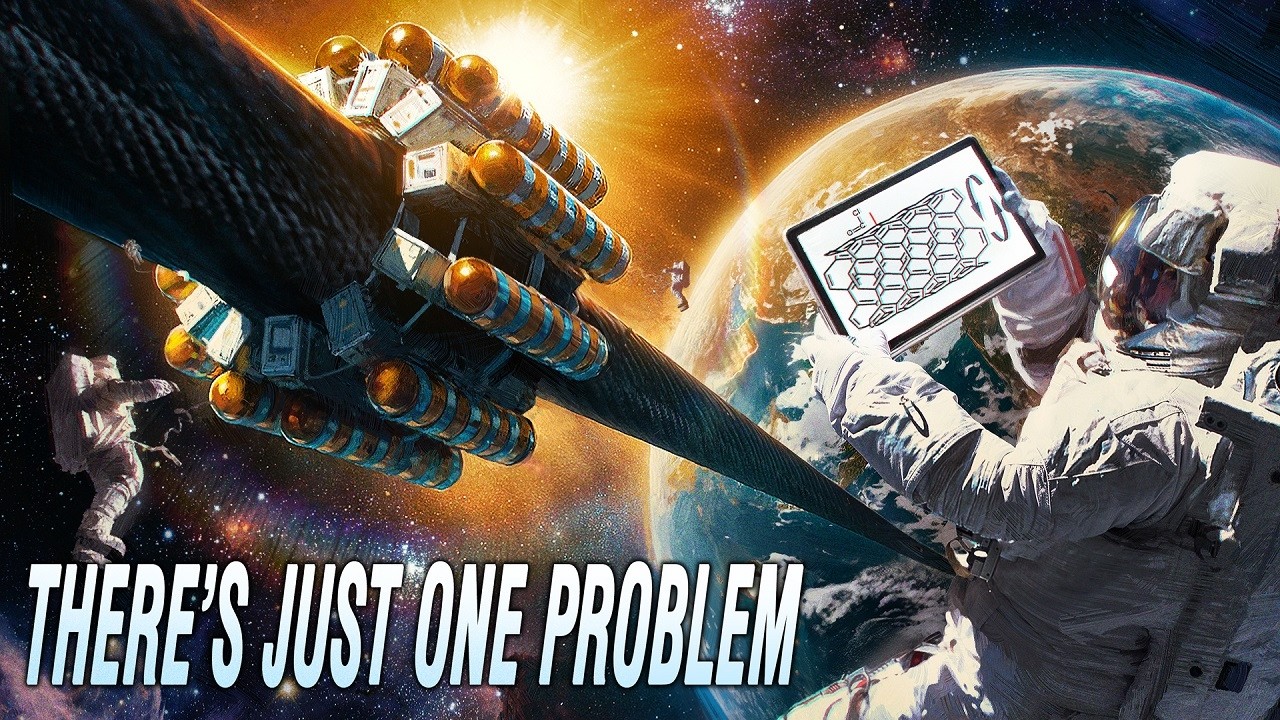
Kyle Hill Talks Space Elevators

LBD "Nytetrayn"
Here’s one I’ve been trying to get to for a bit now. Since when did things get so busy in the world of Mega Man? I was just cleaning off my desktop and found an image that I was going to use for this, which reminded me that maybe I should actually finish doing it…
—
Across video games, cartoons/anime, comics/manga, and beyond, the Mega Man franchise is one born of science fiction — or perhaps even science fantasy, if you want to get right down to it. Either way you slice it, though, science lies at the root of it.
And sometimes that science has a tendency to cross over into real life — or, at least, real scientific theory. That brings us to today’s subject, which has been a prominent recurring feature throughout the Mega Man franchise: The space elevator, also known as the “orbital elevator”, “space bridge”, “star ladder”, and “orbital lift”.
The purpose of these hypothetical devices is essentially that, by using mechanical means, we could bypass the need to achieve escape velocity from the Earth’s atmosphere using large rockets that consume large amounts of fuel. Space elevators have been commonplace in fiction for decades (maybe longer), as seen in such franchises as Gundam, Transformers, Contra, Halo, and Star Wars. And, of course, Mega Man.
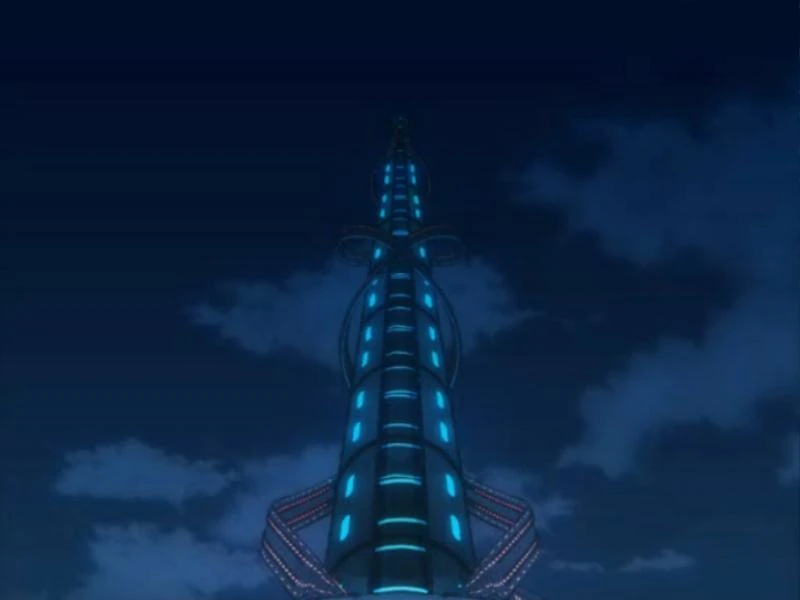
Think of it as a really high-tech ladder.
Space elevators have been a part of the Mega Man franchise for quite a long time. The first appearance many would recognize was in 2004’s Mega Man X8, where the elevator known as “Jakob”. Here, it played a major role in the story, where it not only served as a plot device, but also a stage later in the game. It would even go on to be revisited as a challenge stage in Mega Man X DiVE, where it contained a whopping 93 levels.
Somewhere along the way, however, some wires got crossed or something, as when info about the game first started coming out, people took the concept of “an elevator to the moon” a little too literally (for the record, Jakob does not connect to the moon), leading to mockery, derision, jokes, and ridicule.
While Jakon is probably the best-known space elevator in the franchise and many people’s introduction to the concept, it was not the first to appear. Only a few months prior to Mega Man X8‘s release, Mega Man X: Command Mission also featured one named Babel. On account of the game’s recent re-release on PlayStation Plus and how it’s used in the story, I won’t go into any further detail for those who are only now getting to play it.
In retrospect, those were only a vision of things to come, as prior to that, they would be featured in the Mega Man Zero series.
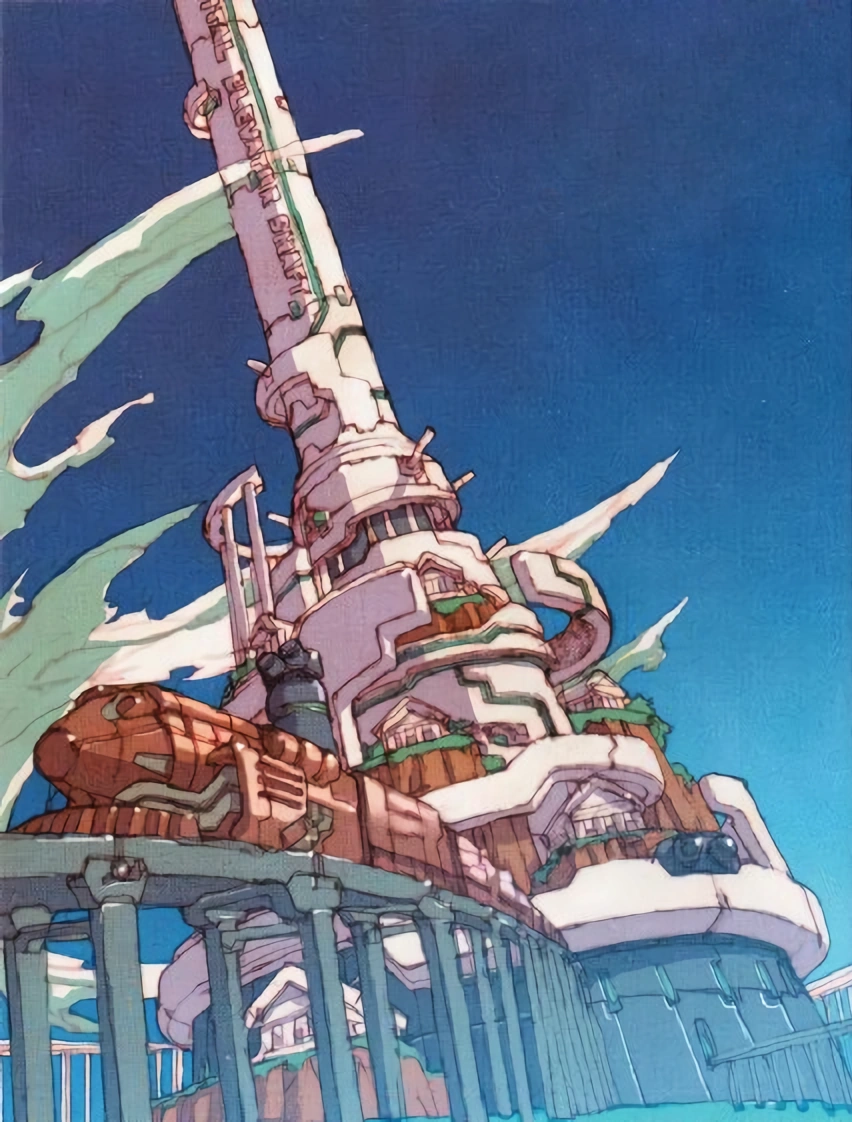
Visit Neo Arcadia Tower! Check out scenic Area X! You’ll have the best time of your life! You’ll also have the last time of your life!
Neo Arcadia Tower is but one of many space elevators, according to the series’ various Remastered Tracks releases. It is featured in the first game as the final stage, leading to Area X and the final showdown.
Well, actually, calling it a “space elevator” is kind of a misnomer, as it was said to have been destroyed during the Maverick Wars and rebuilt, minus the elevator function. Still, you can see the words “Orbital Elevator Shaft” (or at least part of “orbital”) on the side in the image above.
That said, there would be another appearance ahead of the concept’s debut in the Mega Man X series with another featured in 2004’s Mega Man Zero 3, leading to Area X-2. Wow, three Mega Man games with three space elevators in one year. And then the following year would see another called “Yggdrasil” appear in the Rockman.EXE Stream episode “Neo WWW Annihilation”!
And while the following aren’t officially labelled as space/orbital elevators, the resemblance is too strong to ignore.
First, there was a level in the 2008 mobile game Rockman DASH: Great Adventure on the 5 Islands:
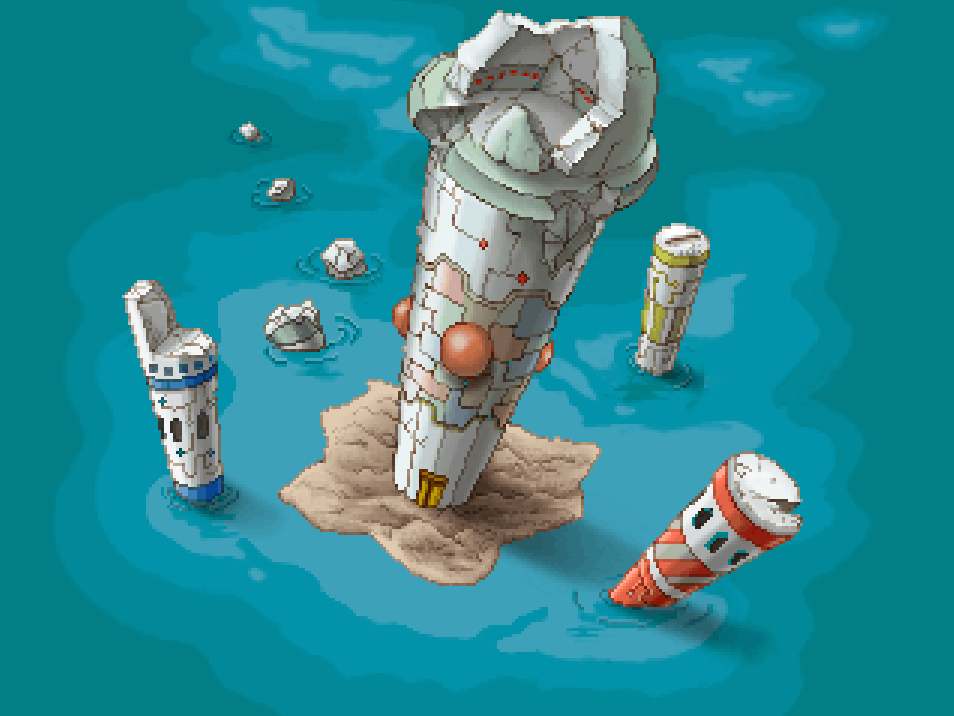
Thanks to Mega Alex for the screenshot!
The Ancient Tower goes up quite a way, but due to being broken at the top, we don’t know how high it originally stood. That said, MegaMan Volnutt does discover a transport at the highest level marked “Elysium” (or “Heaven” in Japan), leading some to believe that this was once an orbital elevator that was used to reach the Ancients’ “perfect world” that sits in orbit over Terra. But with the device out of action, other means would have to be used to go between it and the planet below.
Last, but not least, there’s Wily Castle in Mega Man 10:
That’s a whopper, alright! I don’t think it’s really specified, but I guess we’re to assume that it’s from up on top of this thing that Wily was able to spread his Roboenza virus, much as Sigma did with his eponymous virus from the Eurasia space colony in Mega Man X5.
So, what’s the point of all this, you may ask?
Well, a little while back, award-winning science educator and entertainer Kyle Hill created a video on YouTube which explains what’s holding the scientific concept back from becoming a scientific reality:
All of which is to say, as a Mega Man fan, I found this interesting and thought others might, too.
If you’re interested in a more elaborate look at the presence of space elevators in the Mega Man franchise, Mega Man Knowledge Base has this article, though for the Mega Man Legends part, you’ll want to click here, or visit the game’s page on Mega Man Legends Station.
Now, whenever a Mega Man fan asks you “What’s up?”, you can reply…

…elevators.
—–
Thanks for reading! And in case you haven’t heard, the hosting costs for keeping this place running ain’t cheap, so if you like what we’re doing here, would like to see us expand our breadth of content, and can kick in a few bucks to our Patreon, buy us an E Tank on Ko-fi, or just do something with PayPal, we’d greatly appreciate it!
Prev/Next in Category(s)
Prev/Next by Date

Press Release: Capcom Heats Up with New Reveals and Announcements from TGS 2026 Spotlight!
Capcom kicked off Tokyo Game Show in style…

Press Release: First-Ever Capcom Store Pop-Up in the U.S. Opening Its Doors on September 19!
Come one, come all…

Support Us on Patreon


Buy the Comics
- Nadia & David’s Halloween Marathon 2026: Castlevania II: Simon’s Quest (Part 2)

What have we gotten ourselves into...?

Comments